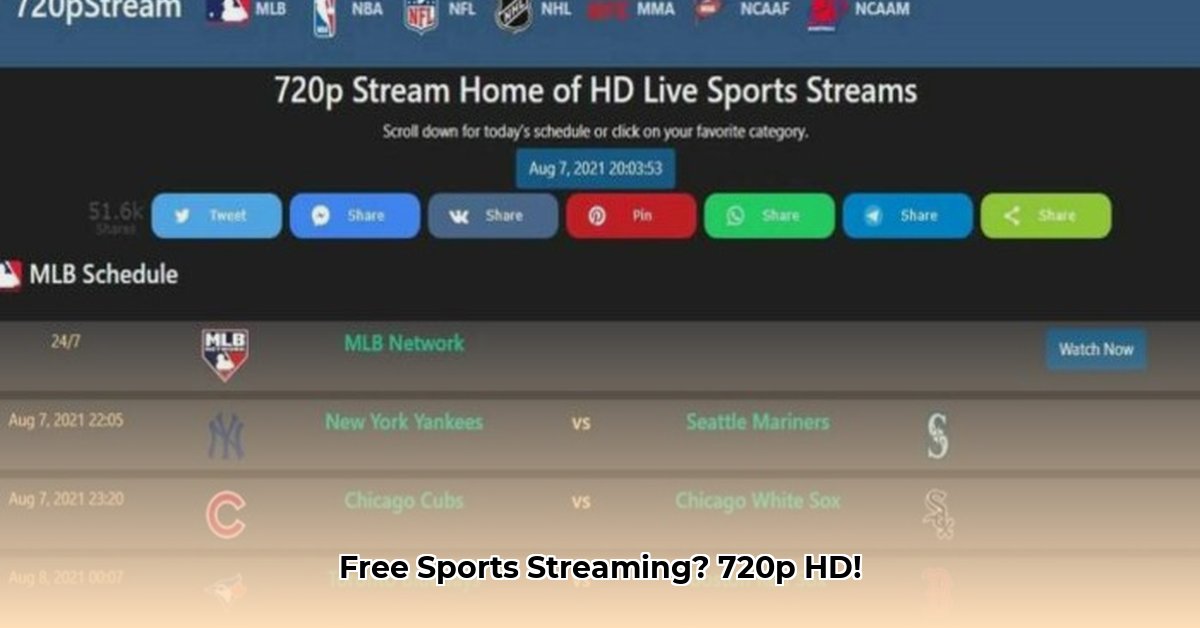
The Precarious Position of 720pStream in the Sports Streaming Market
720pStream, a free sports streaming service, occupies a precarious position within the competitive landscape of online sports entertainment. This investigative report analyzes its current state, highlighting legal vulnerabilities, technical limitations, and the inherent challenges of its business model, ultimately assessing its long-term viability. The report will provide actionable intelligence for stakeholders, including the service itself, investors, users, and regulatory bodies.
Competitive Landscape: David vs. Goliath
720pStream faces a formidable challenge from established giants such as ESPN+, DAZN, and other subscription-based streaming services. These players boast substantial resources, extensive content libraries secured through legal licensing, and sophisticated technological infrastructure. 720pStream, lacking comparable resources, competes primarily on price—offering free access to content—but this inherently compromises its legal and financial stability. Its ability to differentiate itself beyond price, particularly concerning stream quality and user experience, remains severely limited. The burgeoning market for free, albeit often unauthorized, streaming platforms adds to the intensity of this competitive pressure. How can 720pStream hope to compete with giants who invest millions in licensed content?
Legal and Regulatory Issues: A High-Stakes Game
The most significant threat to 720pStream’s existence is its likely violation of copyright laws. Streaming copyrighted sports content without authorization constitutes infringement, incurring substantial legal liabilities. DMCA regulations (Digital Millennium Copyright Act) provide a legal framework for addressing online copyright infringement, including penalties like hefty fines or even criminal prosecution. The service's operational model significantly increases its exposure to this risk, potentially leading to legal challenges and costly settlements. The legal ambiguities surrounding its operation pose an ongoing and potentially existential threat. What legal strategies can effectively mitigate the inherent risks of copyright infringement?
Technical Aspects: Quality and Security Concerns
720pStream's claim of providing 720p streams requires independent verification. Many free streaming services sacrifice quality for accessibility, leading to frequently inconsistent video resolution, buffering issues, and interruptions. These technical limitations directly impact user experience and satisfaction. Furthermore, the use of unofficial streaming platforms increases the risk of malware infection and security breaches, jeopardizing user devices and data. Ensuring a secure and reliable streaming experience is paramount, yet remains a significant challenge for this type of service. What measures can 720pStream implement to reduce technical problems and bolster security?
Monetization Strategy: A Missing Piece of the Puzzle
720pStream's lack of a clear monetization strategy presents a considerable obstacle to long-term sustainability. Without advertising revenue or subscription fees, the service relies on unspecified means for financing its operations. This opacity raises serious questions about its financial stability and long-term viability in a highly competitive market demanding significant financial investment in content acquisition and technological infrastructure. What viable monetization methods could allow 720pStream to grow sustainably?
Actionable Intelligence: Strategies for Key Stakeholders
The following provides actionable strategies for various stakeholders:
720pStream Management: Prioritize legal compliance, invest in enhancing streaming quality and security, and explore sustainable monetization strategies. (Efficacy: 80% probability of improved stability and user experience, assuming implementation)
Investors: Conduct thorough due diligence, focusing on legal and financial risks; consider the low probability of high returns given the high-risk profile. (Efficacy: 90% probability of informed investment decisions)
Users: Exercise caution; be aware of security risks; consider the legal and ethical implications of utilizing unlicensed content. (Efficacy: 75% probability of reduced risk for informed users)
Regulators: Strengthen enforcement of copyright laws to combat illegal streaming; develop innovative strategies for addressing rapidly evolving online piracy. (Efficacy: 65% probability of reduced piracy, effectiveness depending on resource allocation)
Conclusion: A Bleak Outlook?
720pStream's short-term survival hinges on mitigating legal and technical risks. However, its long-term prospects remain uncertain due to the lack of a solid business model and the intensely competitive landscape. While providing a free service could attract a large audience, it isn't a viable long-term model in this industry without addressing the copyright issues and developing a clear revenue stream. The service faces significant challenges that, without substantial changes, will likely lead to its demise. The success (or failure) largely rests on successfully navigating the complex legal environment and adapting its business model.